

Moroccan djellaba styles fall into a handful of clear families: plain wool robes for winter, embroidered ceremonial pieces for weddings and Eid, lightweight cotton for daily summer wear, and slimmer modern cuts for city life. This guide walks through each look, explains the regional tailoring behind them, from Fes to the Rif, and covers fabric choices, styling formulas, and the artisan details, sfifa braiding, aqad fastenings, that separate a well-made piece from a mass-produced one. An example men’s collection sits alongside these examples throughout.
TL;DR:
- Traditional wool djellabas are heavy winter robes known for their deep hoods and neutral colors, doubling as coats in cold weather.
- Regional tailoring influences style, with Fes producing formal embroidery, Marrakech favoring contemporary cuts, and mountain regions opting for heavier fabrics for warmth.
- Fabric care varies: wool requires dry cleaning and careful storage, while cotton and linen are machine washable; velvet and sabra need delicate handling.
- Hand-finished djellabas feature details like silk sfifa braid and knotted aqad buttons that machine-made versions seldom replicate properly.
- Modern adaptations maintain the garment’s core craft elements, with winter coats like the Farwa integrating traditional wool, suitable for layered outerwear.
Table of Contents
- Traditional and modern Moroccan djellaba styles: a catalogue
- How regional tailoring shapes the look
- Fabric, season, and simple care rules
- Styling formulas that work for every occasion
- What separates hand-finished quality from mass production
- Tradition and modern cuts: a publisher’s perspective
- Bring these styles into your own wardrobe
- Sources
- FAQ
Traditional and modern Moroccan djellaba styles: a catalogue
Ask ten Moroccans to describe a djellaba and you’ll get ten slightly different answers, because the garment has splintered into distinct families over the past century. Each one signals something different about the occasion, the season, and sometimes the wearer’s town of origin.
- The traditional plain wool robe. Cut long and loose with a deep, pointed hood, this is the winter workhorse. Neutral tones, camel, charcoal, oatmeal, dominate, and the fabric is dense enough to double as a coat on cold mornings.
- The Fassi embroidered djellaba. Formal and ceremonial, this style carries fine silk sfifa trim down the front placket and around the cuffs, often in a contrasting thread colour. It’s the piece you’ll see at a wedding reception rather than a Tuesday commute.
- Lightweight cotton or linen djellaba. Built for heat, this version drops the heavy lining and opts for pastel or bright block colours. It’s the everyday choice across much of Morocco for exactly the reason the original garment exists: breathable cotton for summer, coarse wool for winter.
- Velvet and sabra ceremonial pieces. Reserved almost entirely for weddings and Eid, these use richer, heavier fabrics with dense embroidery. Sabra, a silk-like fibre traditionally drawn from cactus, adds a subtle sheen that catches light differently to cotton or wool.
- Modern tailored and shorter cuts. Urban fashion has pulled the classic silhouette into slimmer lines and shorter hems, closer to a coat length than a full-length robe, while keeping the hood as a nod to heritage.
- Polar fleece and mountain wool variants. Practical rather than decorative, these turn up in colder highland regions where warmth outranks ornamentation. Construction is simpler, and the fabric is often locally spun.
A few features cut across every one of these styles:
- The pointed hood, or qob, remains standard regardless of fabric weight or formality.
- Sleeve width varies by region, wider for ease of movement, narrower for a more tailored modern look.
- Buttons run the full front length on most traditional pieces, though modern cuts sometimes shorten this to a half placket.
- Colour choice for men tends towards restraint, while women’s djellabas lean into embroidery and brighter palettes.
- Length adjusts by use case: ankle-length for formal wear, shin-length for practical daily use.
Historically, the hood also served as a portable pouch in warm weather and head protection against sun and sand, a detail that still shapes how deep and roomy a well-cut hood should be.
How regional tailoring shapes the look
A djellaba’s silhouette often tells you where it was made before you ever check a label. Regional tailoring traditions differ enough that a trained eye can place a piece within a few towns of its origin.
- Fes produces the most formal end of the spectrum: fine hand embroidery, silk sfifa, and tight, precise tailoring built for ceremonial occasions.
- Marrakech favours boldness, brighter colours, contemporary silhouettes, and design details that borrow from wider fashion trends rather than strict tradition.
- Rabat and Salé sit somewhere in between, restrained urban elegance with subtle embroidery rather than heavy ornamentation.
- The Rif and Atlas mountains prioritise function: heavy wool, simpler construction, and natural dyes suited to cold, exposed climates.
- The south trades weight for breathability, lighter fabrics and looser cuts built for heat rather than formality.
None of these are rigid boundaries. A tailor in Rabat might borrow Fassi embroidery for a special commission, and Marrakchi colour choices have crept into djellabas sold well beyond the city. But as a starting point for reading a garment’s origin, regional signature is one of the more reliable guides available.
Fabric, season, and simple care rules
Matching fabric to season is the single most practical decision in choosing a djellaba, and it’s also where most first-time buyers get it wrong. Wool suits winter and holds up for years if you look after it: spot clean where possible, air dry rather than tumble dry, and send heavier pieces to a professional cleaner once a season rather than washing them at home.
Cotton and linen versions are far more forgiving. Most are machine washable on a gentle cycle, and they dry quickly, which is part of why they dominate everyday summer wear across the country.
Velvet and sabra sit at the other extreme. These formal fabrics need delicate handling, dry cleaning in most cases, and careful storage between wears since crushing or folding can leave marks that don’t brush out.
A short care checklist worth keeping in mind:
- Store wool pieces with cedar blocks or lavender sachets to deter moths.
- Steam rather than iron directly on embroidered sections to avoid flattening sfifa trim.
- Hang formal pieces rather than folding them, particularly velvet.
- Air heavy wool djellabas after each wear before returning them to storage.
Styling formulas that work for every occasion
You don’t need a stylist to wear a djellaba well. Three simple formulas cover most situations.
- Casual daily wear: a lightweight cotton djellaba, bare feet or simple sandals indoors, babouche slippers outdoors, minimal accessories.
- Smart-casual: a tailored mid-weight djellaba in a neutral tone, paired with leather loafers and a plain leather belt if the cut allows one.
- Formal occasions: an embroidered or velvet piece, babouche in a matching or contrasting leather, and understated jewellery or a watch as the only accent.
Footwear does a lot of the work in signalling formality. Babouche slippers read as traditional and are the safer choice for weddings or Eid gatherings, while loafers or clean boots suit a modern, tailored djellaba worn as outerwear over jeans.
Fit matters more than most buyers expect. Choose a length that clears the ground by an inch or two, and check sleeve width allows a full arm swing, tight sleeves look modern but restrict movement in the way the original loose-cut design was built to avoid.
Pro Tip: Wear a shorter, tailored djellaba open over a plain shirt and trousers as an outer layer, this turns a traditional robe into a contemporary capsule piece without losing the hood or silhouette that makes it recognisable.
What separates hand-finished quality from mass production
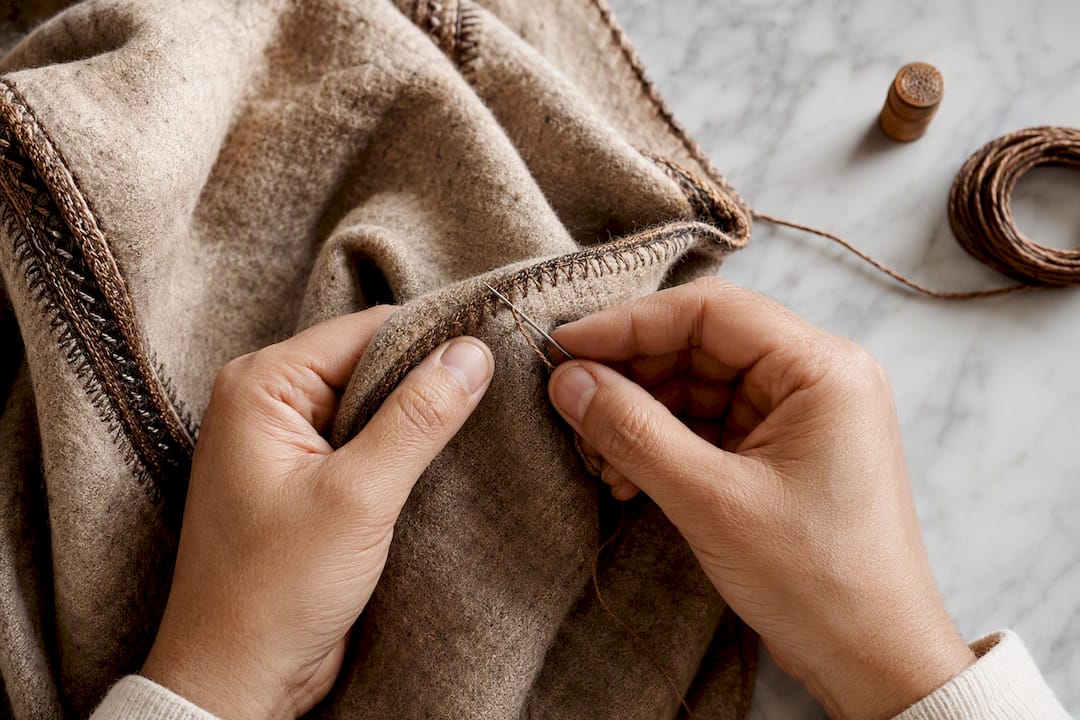
Two details give away a hand-finished djellaba almost instantly: sfifa and aqad. Sfifa is the braided trim, often silk, that runs down the front and around cuffs; on quality pieces it’s hand-plaited and sewn with visible, even stitching. Aqad refers to the hand-knotted button loops that fasten the front, a small detail, but one that takes real skill to execute cleanly. Machine-made alternatives usually swap these for stitched or glued trim and plastic buttons, which rarely hold up to repeated wear.
A quick buying checklist:
- Run a hand along the fabric. Genuine wool and cotton feel dense and consistent, not papery.
- Check stitch density along seams, tighter stitching means better durability.
- Examine the hood shape. A well-cut qob sits structured rather than floppy.
- Confirm the lining is stitched in, not simply glued or tacked.
YAZIR’s men’s djellaba guide walks through these same markers against the brand’s own range, useful if you want a concrete reference point before buying.
Tradition and modern cuts: a publisher’s perspective
Preserving a hood, a loose sleeve, and honest sfifa work matters more to a djellaba’s character than chasing a slimmer silhouette. The best modern adaptations keep the craft intact and simply adjust length or fit for contemporary wardrobes, rather than stripping the garment down to something unrecognisable.
— Yazir
Bring these styles into your own wardrobe
Winter tailoring translates particularly well into outerwear, and the Farwa coat sits close to that tradition: heavy wool, structured cut, built for cold weather rather than ceremony. The Men’s Grey Farwa Coat works as a neutral base layer over any djellaba or standard outfit, while the Men’s Navy Farwa Coat leans slightly dressier for evening wear. The Men’s Brown Farwa Coat offers a warmer tone that pairs easily with the earthier wool djellabas discussed earlier.
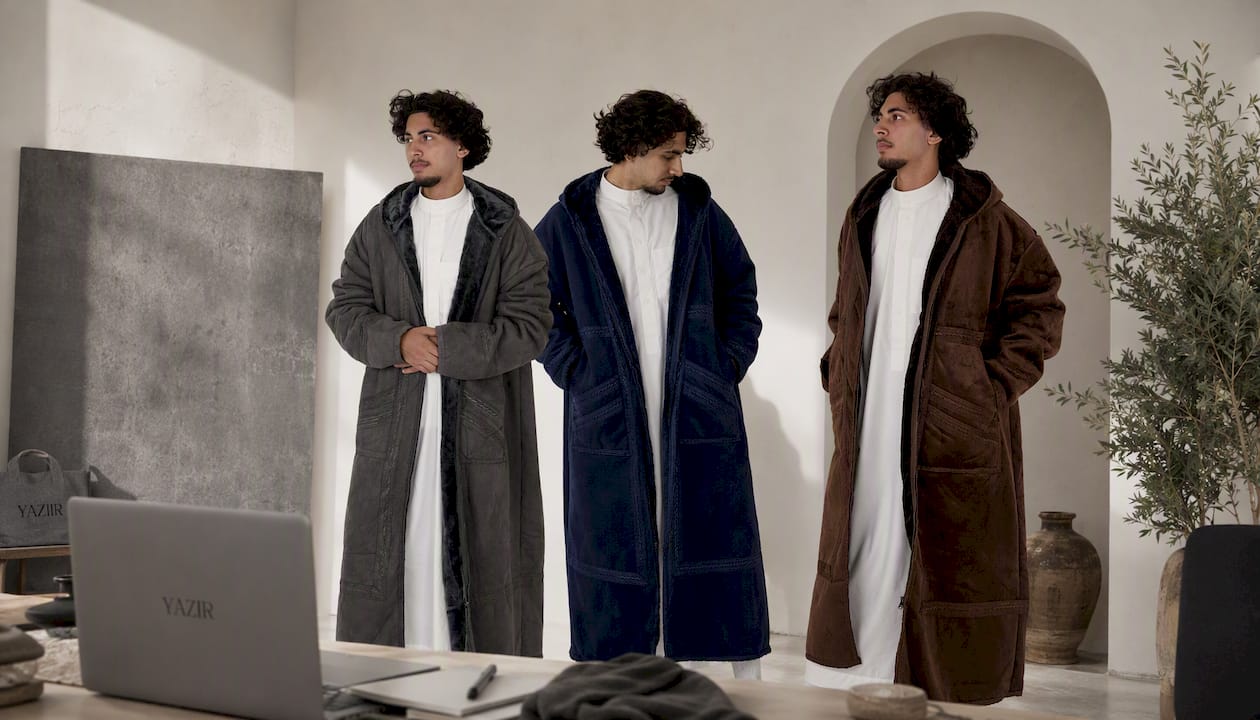
If any of the looks covered here caught your eye, the full range sits on YAZIR’s men’s collection, with sizing notes and fabric details on each product page. Browse the coats and djellabas directly, check the fit guide against your measurements, and place an order ahead of the season you’re dressing for.
Sources
FAQ
Can tourists wear a djellaba in Morocco?
Yes. Djellabas are everyday garments rather than costumes, and visitors wearing one respectfully, particularly a plain or lightly decorated style, are not seen as inappropriate.
What do you wear to a Moroccan themed party?
A simple cotton or lightweight djellaba in a bright colour works well, paired with babouche slippers if available; save heavily embroidered ceremonial pieces for genuine formal occasions.
What is the difference between a djellaba and a kaftan?
A djellaba has a pointed hood and is designed as an outer garment, often for daily wear, while a kaftan is hoodless and typically worn as a standalone formal dress, especially by women.
Why do Moroccans wear djellabas?
The djellaba remains a practical everyday garment across Morocco, worn for daily life, travel, and celebrations, with the hood offering protection from sun, wind, and cold depending on the season.
0 comments